How Artificial Intelligence Is Changing Everyday Life in 2026: Will AI Replace Human Jobs?
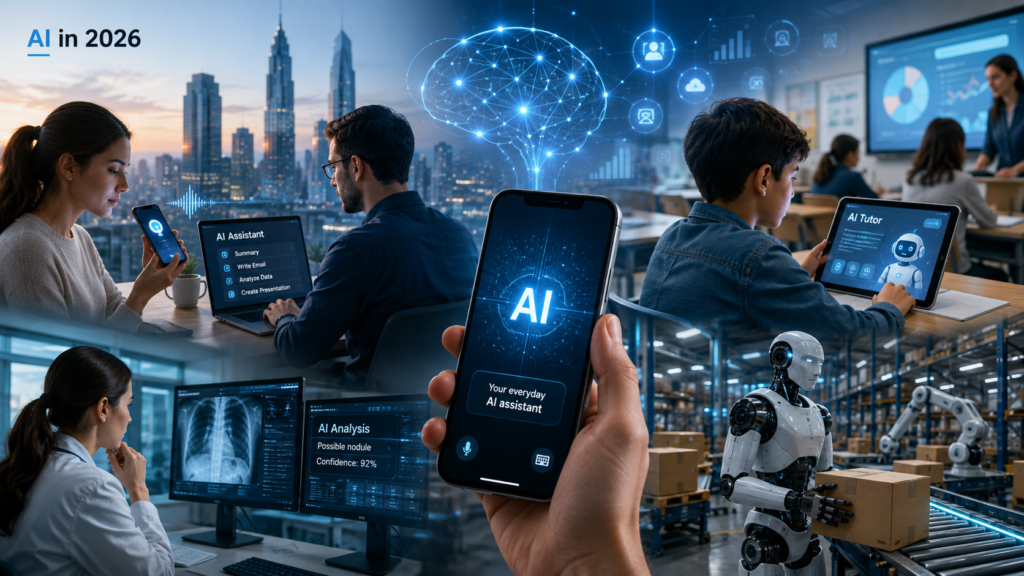
Artificial Intelligence is no longer a futuristic concept. In 2026, AI has become part of everyday life for millions of people around the world. From smartphones and workplaces to schools and hospitals, AI is changing how people work, learn, communicate, and solve problems.
Just a few years ago, AI tools were mostly used for answering questions or generating text. Today, they can perform tasks, analyze data, create videos, write reports, translate languages, and even help doctors diagnose diseases. As AI becomes more powerful, many people are asking the same question:
Will AI replace human jobs?
The answer is not as simple as yes or no. While some jobs are being affected by automation, new opportunities are also being created. Understanding how AI is changing daily life can help people prepare for the future instead of fearing it.
What Artificial Intelligence Looks Like in 2026
The biggest change in 2026 is that AI is no longer just a chatbot.
Modern AI systems are becoming digital assistants that can perform real tasks. Instead of simply answering a question, AI can now:
- Schedule meetings
- Write emails
- Create presentations
- Analyze spreadsheets
- Generate reports
- Research information
- Translate conversations in real time
Many businesses are already using AI tools to reduce repetitive work and improve productivity.
For workers, this means less time spent on routine tasks and more time focused on decision-making and creative work.
AI in Smartphones
One of the most common places people interact with AI is through their smartphones.
Many modern devices now include AI-powered features such as:
Smarter Cameras
AI can automatically improve photos by adjusting lighting, removing unwanted objects, and enhancing image quality.
Voice Assistants
Voice assistants have become more natural and capable. They can understand complex requests and perform multiple actions at once.
AI Writing Tools
Many phones now offer AI writing assistance that can rewrite messages, fix grammar mistakes, summarize text, and suggest responses.
AI Search
Instead of searching through multiple websites, AI can provide direct answers and summaries, helping users find information faster.
These features save time and make technology easier to use for everyday people.
AI at Work
The workplace is experiencing one of the biggest transformations because of AI.
Companies are increasingly using AI to automate tasks that previously required hours of human effort.
Examples include:
- Writing reports
- Processing documents
- Managing customer inquiries
- Organizing data
- Creating marketing content
- Assisting with coding
In many offices, employees now work alongside AI rather than using it occasionally.
An AI assistant can draft a report in minutes, while a human reviews the information and makes final decisions.
This partnership between humans and machines is becoming the new normal.
Is AI Taking Jobs Away From Humans?
This is one of the most discussed topics in technology today.
The reality is that AI is affecting certain jobs, particularly those involving repetitive and predictable tasks.
Entry-level positions are often the first to feel the impact because many of their responsibilities can be automated.
For example:
- Data entry
- Basic administrative work
- Simple customer support
- Routine content generation
Businesses naturally look for ways to reduce costs and increase efficiency. If software can complete a task faster and cheaper, some companies will choose automation.
However, this does not mean all jobs are disappearing.
Historically, new technologies have often replaced certain roles while creating entirely new industries and opportunities.
AI appears to be following a similar pattern.
Jobs Most Likely to Be Affected by AI
Some professions face greater disruption because much of their work follows predictable patterns.
Administrative Roles
Scheduling meetings, managing calendars, and processing documents can now be handled by AI tools.
Data Entry
AI systems can process large amounts of information much faster than humans.
Basic Customer Support
Chatbots can answer common questions without human involvement.
Entry-Level Content Creation
Simple articles, product descriptions, and marketing materials can often be generated automatically.
People working in these fields may need to develop additional skills to remain competitive in the job market.
Jobs That AI Cannot Easily Replace
Despite rapid advances, many professions still require human abilities that machines struggle to replicate.
Healthcare Professionals
Doctors, nurses, and therapists rely on judgment, empathy, and communication.
AI can assist them but cannot fully replace human care.
Teachers
Education is about more than delivering information. Teachers motivate students, manage classrooms, and provide emotional support.
Skilled Trades
Electricians, plumbers, mechanics, and construction workers perform physical tasks in unpredictable environments.
These jobs remain difficult to automate.
Managers and Leaders
Leadership requires strategic thinking, negotiation, and understanding people.
These skills are still uniquely human.
Creative Professionals
AI can generate ideas, but originality, storytelling, and artistic vision remain valuable human strengths.
AI in Education
Education is becoming more personalized thanks to AI.
Traditional classrooms often teach every student the same way, even though people learn differently.
AI-powered learning tools can adapt to individual needs by:
- Identifying weaknesses
- Adjusting lesson difficulty
- Providing instant feedback
- Offering one-on-one tutoring
Students can receive help whenever they need it rather than waiting for a teacher to become available.
Language learning is also improving through AI-powered conversation partners that provide real-time corrections and guidance.
While AI cannot replace teachers, it can make education more accessible and effective.
AI in Healthcare
Healthcare is another area experiencing major benefits from AI.
Medical professionals are using AI to:
- Analyze medical scans
- Detect diseases earlier
- Monitor patient health
- Assist with diagnoses
- Accelerate drug research
In some cases, AI can identify patterns that humans might overlook.
This does not mean AI replaces doctors. Instead, it acts as a powerful tool that helps healthcare professionals make better decisions.
Earlier diagnosis can lead to faster treatment and improved patient outcomes.
AI Risks and Challenges
Although AI offers many advantages, it also creates serious concerns.
Job Displacement
Workers in certain industries may struggle if their roles become automated.
Deepfakes
AI-generated videos and audio can make it difficult to determine what is real and what is fake.
Privacy Concerns
AI systems often require large amounts of data, raising questions about personal privacy and security.
Misinformation
AI can rapidly generate content, which may contribute to the spread of false information online.
Governments, businesses, and technology companies are still working to address these challenges.
Responsible development will play a major role in determining AI’s long-term impact.
New Opportunities Created by AI
While many discussions focus on job losses, AI is also creating entirely new career paths.
Some emerging roles include:
AI Specialists
Professionals who develop, train, and improve AI systems.
Automation Consultants
Experts who help businesses implement AI solutions.
AI Content Reviewers
People responsible for evaluating and improving AI-generated content.
Prompt Engineers
Specialists who know how to communicate effectively with AI tools to achieve specific outcomes.
AI Trainers
Individuals who help AI systems learn through data and feedback.
As technology evolves, new jobs that do not currently exist are likely to emerge.
What the Future Could Look Like
The coming years may bring even more significant changes.
AI agents are expected to become increasingly capable of handling complex tasks independently.
Businesses may rely on AI for routine operations while humans focus on strategy, creativity, and relationship building.
Video generation, voice synthesis, translation, and digital assistants will continue improving.
Many experts believe the future workplace will involve humans managing AI systems rather than competing directly against them.
Those who learn how to work with AI will likely have an advantage over those who ignore it.
Conclusion
Artificial Intelligence is transforming everyday life in 2026 faster than many people expected.
It is changing how we use smartphones, perform our jobs, learn new skills, and receive healthcare. Some jobs are being affected by automation, particularly roles involving repetitive tasks. At the same time, AI is creating new opportunities and helping people become more productive.
The future is unlikely to be a world where humans are completely replaced by machines. Instead, it is becoming a world where humans and AI work together.
The people who adapt, learn new skills, and understand how to use AI effectively will be best positioned to succeed in the years ahead.
Rather than asking whether AI will replace humans, the better question may be:
How can humans use AI to achieve more than ever before?