GPT-6 Astra Explained: 7 Reasons This AI Feels Like a Major Leap Forward
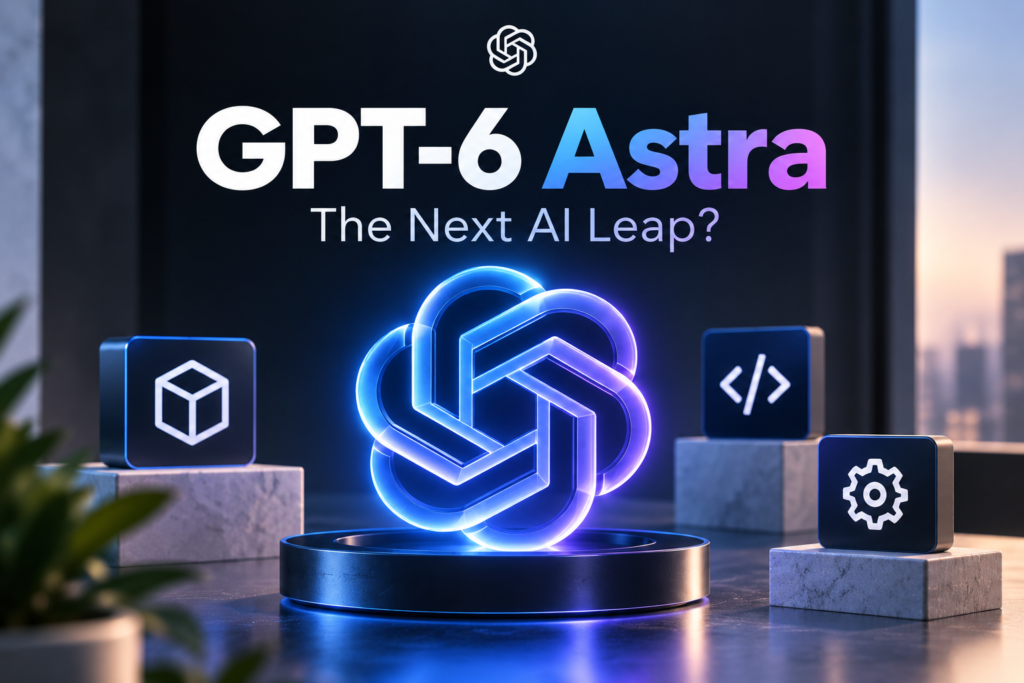
Artificial intelligence evolves quickly, but every so often a new model arrives that changes the conversation. GPT-6 Astra is one of those models.
While previous AI systems focused on writing, answering questions, and generating code, GPT-6 Astra appears to push much further. It combines advanced reasoning, software development, computer control, and visual creation in ways that were previously difficult or impossible for most AI tools.
Developers, creators, entrepreneurs, and productivity enthusiasts are already experimenting with Astra to build applications, create games, generate 3D environments, and automate complex workflows.
So what makes GPT-6 Astra different?
Here are seven reasons why many early users believe GPT-6 Astra represents a significant step forward in AI capability.
1. GPT-6 Astra Is Surprisingly Good at 3D Design
One of the biggest surprises surrounding GPT-6 Astra is its ability to work with 3D software.
Traditionally, creating 3D environments required specialized knowledge of tools such as Blender, Unreal Engine, or Unity. Artists often spent hours modeling objects, designing environments, and fine-tuning assets.
GPT-6 Astra changes that equation.
Users are already using Astra to:
- Create 3D buildings from floor plans
- Generate game-ready environments
- Build realistic architectural models
- Design educational simulations
- Produce photorealistic renders
Instead of manually creating every object, users can provide reference material such as PDFs, images, or blueprints and allow the AI to generate a usable 3D scene.
This dramatically reduces the time required to move from idea to prototype.
For architects, game developers, educators, and designers, that could become a major productivity advantage.
2. AI-Powered Game Development Is Becoming Reality
Game development has traditionally required teams of programmers, artists, designers, and testers.
GPT-6 Astra demonstrates how much of that process can now be accelerated.
Users have reported creating playable multiplayer games using only a handful of prompts. Instead of spending weeks building maps, coding mechanics, and designing assets, Astra can generate much of the foundation automatically.
Potential use cases include:
- First-person shooter prototypes
- Educational games
- Simulation environments
- Custom multiplayer experiences
- Interactive learning tools
The most important takeaway is not that AI will replace game developers.
The real shift is that individuals can now create projects that previously required an entire team.
This lowers the barrier to entry for creators and independent developers.
3. Vibe Coding Has Reached a New Level
The term “vibe coding” has become increasingly popular in the AI community.
It refers to creating software through natural language instructions instead of traditional programming.
GPT-6 Astra takes this concept further than most previous models.
Users can describe an application in plain English and receive a working version within minutes.
Examples include:
- Productivity tools
- Internal business dashboards
- Desktop applications
- Lead generation websites
- Workflow automation tools
- Personal utilities
Rather than manually writing hundreds of lines of code, users focus on describing outcomes.
The AI handles much of the implementation.
For entrepreneurs and small businesses, this could significantly reduce software development costs.
For non-technical users, it opens doors that were previously inaccessible.
4. Computer Control Is Becoming Remarkably Advanced
One of Astra’s most impressive capabilities is computer use.
Instead of simply generating instructions, GPT-6 Astra can interact with software directly.
This means the AI can:
- Open applications
- Navigate websites
- Fill forms
- Edit files
- Test software
- Manage workflows
- Interact with development tools
In practical terms, Astra behaves less like a chatbot and more like a digital operator.
This unlocks powerful automation possibilities.
Imagine asking AI to:
- Build a website
- Test the website
- Fix detected issues
- Publish the final version
Without requiring constant supervision.
That level of autonomy is becoming increasingly realistic.
5. GPT-6 Astra Can Test Its Own Work
One of the biggest weaknesses of earlier AI systems was their inability to reliably verify results.
GPT-6 Astra appears to make meaningful progress in this area.
Instead of stopping after generating an output, Astra can evaluate its own work.
The process often looks like this:
- Generate a solution
- Test the solution
- Identify problems
- Apply improvements
- Repeat until acceptable
This iterative workflow resembles how human developers work.
For example, when creating software, Astra can:
- Run the application
- Detect bugs
- Analyze screenshots
- Review output
- Make corrections
This ability to self-test reduces the amount of manual review required from users.
While not perfect, it represents a major step toward more autonomous AI systems.
6. GPT-6 Astra Works Best Inside Powerful Agent Environments
Many users report that Astra becomes significantly more capable when paired with advanced agent platforms.
Instead of operating as a simple chatbot, it gains access to tools such as:
- Browsers
- File systems
- Development environments
- Image editors
- Databases
- Local applications
This transforms AI from a text generator into an active participant in the workflow.
The difference is important.
A traditional AI can tell you how to complete a task.
An agent-powered AI can actually perform large portions of the task itself.
As AI ecosystems continue to evolve, these integrations will likely become even more powerful.
7. Always-On AI Workstations Are Emerging
Another trend accelerated by GPT-6 Astra is the rise of dedicated AI workstations.
Many power users are setting up always-on systems that allow AI agents to run continuously.
These machines can:
- Build applications
- Monitor projects
- Execute automations
- Process research
- Generate reports
- Test software
All while the user is away.
Remote access tools make it possible to control these systems from:
- Smartphones
- Tablets
- Laptops
- Web browsers
As AI becomes more autonomous, dedicated AI workstations may become as common as personal servers were for developers a decade ago.
What Makes GPT-6 Astra Different?
Most previous AI models focused on one or two areas.
They could write content.
They could answer questions.
They could generate code.
GPT-6 Astra combines multiple capabilities into a single workflow.
It can:
- Understand documents
- Generate software
- Create visual assets
- Control computers
- Test outputs
- Iterate automatically
The result feels less like using a chatbot and more like working with a highly capable digital assistant.
That distinction is important.
The future of AI is not simply about generating text.
It is about completing meaningful tasks from start to finish.
Potential Limitations
Despite its impressive capabilities, GPT-6 Astra is not perfect.
Users should still expect:
- Occasional mistakes
- Inaccurate outputs
- Software compatibility issues
- Hardware limitations
- Access restrictions in certain tools
Human review remains essential, especially for business-critical tasks.
AI is becoming more capable, but oversight is still necessary.
Final Thoughts
GPT-6 Astra represents one of the most interesting developments in artificial intelligence so far.
Its strengths go beyond writing assistance or simple coding support. The model demonstrates impressive abilities in 3D design, game development, software creation, computer automation, and self-testing.
Whether it represents true artificial general intelligence is still open for debate. However, it clearly points toward a future where AI systems can handle increasingly complex workflows with minimal supervision.
For developers, creators, entrepreneurs, and technology enthusiasts, GPT-6 Astra offers a glimpse of what the next generation of AI tools may look like.
And if current trends continue, this is probably only the beginning.